How often should you stain a deck in upstate New York?
The real interval for deck stain and sealer in Capital Region weather, the simple water test, and how to get a finish that lasts more than one winter.
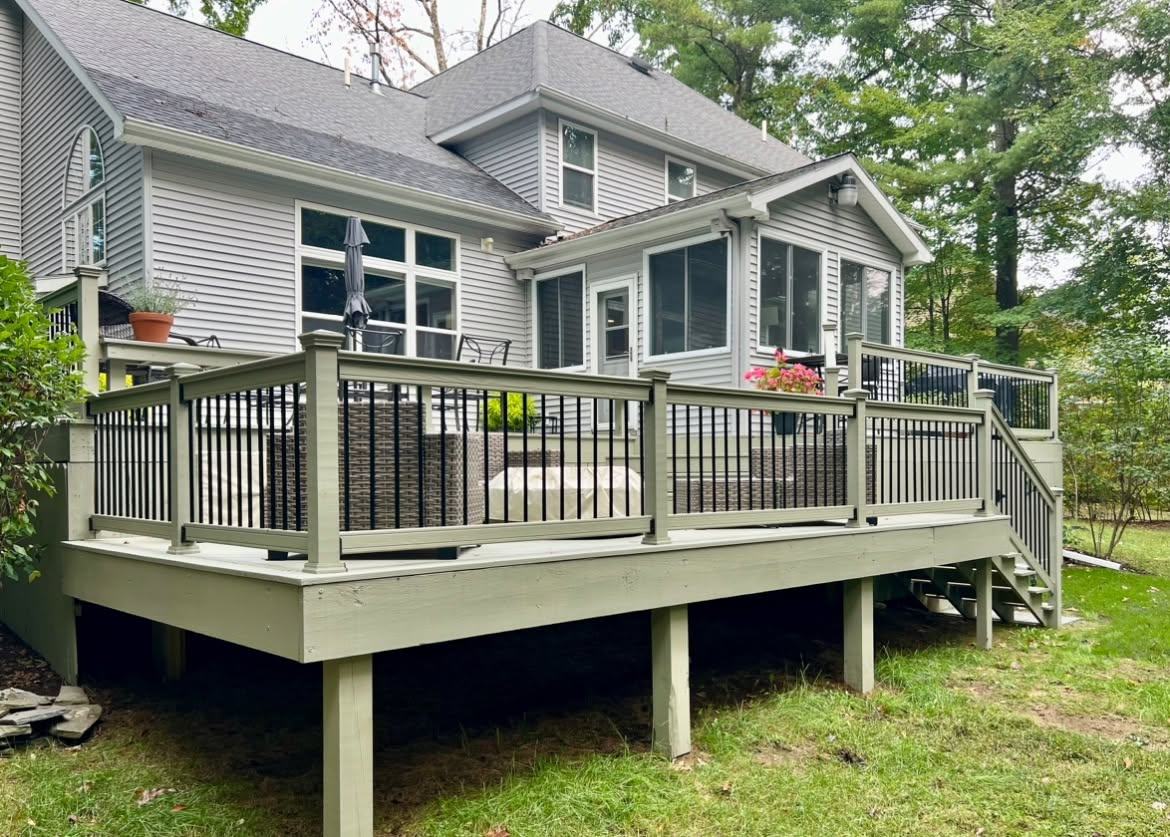
Most wood decks in the Capital Region need a fresh coat of stain every two to three years, with the walking surface wearing out faster than the railings. Clear sealers often need renewing every year, while solid-color stains can last longer on rails and skirting but tend to peel on the floor. The surest sign is the water test: if a splash of water soaks into the boards instead of beading up, the finish is no longer protecting the wood.
Why upstate decks wear out faster
A deck floor takes more abuse than any other painted or stained surface on a house. It faces straight up at the sun, holds standing water after rain, and spends much of the winter under snow. Each thaw soaks the wood, each freeze expands that water inside the fibers, and the cycle repeats many times a season across the Capital Region. Shovels scrape the surface, ice melt gets tracked across it, and spring pollen and leaves hold moisture against the boards.
The rails and balusters see far less wear. Water runs off vertical surfaces, nobody walks on them, and they dry quickly. That is why a typical deck looks fine from the yard while the floor has gone gray and rough.
The water test and other signs it is time
Pour a cup of water on a few spots on the deck floor, including the sunniest boards and the high-traffic path from the door. Then watch.
- Water beads and sits on top: the finish is still working. Check again next year.
- Water darkens the wood within a minute or two: the finish is worn. Plan to restain this season.
- Water soaks in immediately: the wood is unprotected and taking on moisture every time it rains.
Other signs to look for:
- The color has faded or turned silvery gray, especially along the path people walk.
- Small cracks (checks) are opening along the grain of the boards.
- Solid stain or paint is peeling in flakes, which usually means moisture is getting under it.
- Splinters are lifting, a sign the surface fibers have broken down.
- Dark spots or green growth are appearing in shady areas.
If boards are soft when pressed with a screwdriver, or the deck feels bouncy, stain will not fix it. Our article on the signs your deck needs to be replaced explains what to check before spending a weekend on finish.
Which finish lasts longest
The kind of product changes the interval more than the brand does.
| Finish | How it looks | Typical life on a deck floor | Notes |
|---|---|---|---|
| Clear water repellent | Natural wood, no color | About 1 year | Little protection from sun; wood still grays |
| Semi-transparent stain | Grain shows, some color | 2 to 3 years | Wears away gradually rather than peeling; easiest to recoat |
| Solid-color stain | Opaque, like thin paint | Longer on rails, often less on floors | Can peel on horizontal boards; recoating may mean stripping |
For most Capital Region decks we suggest a penetrating semi-transparent stain on the floor. It soaks into the wood rather than forming a film on top, so when it wears it fades instead of flaking, and the next coat goes on after a cleaning instead of a full strip. Solid stain works well on rails, posts and skirting, where it can last noticeably longer.
Prep matters more than the stain
Most short-lived finishes fail because of what happened before the brush came out. A good restain follows a sequence:
- Clean. Use a deck cleaner made for the job to remove dirt, mildew and gray surface fibers. Rinse thoroughly. If you use a pressure washer, keep the pressure low and the tip moving; too much pressure raises the grain and gouges soft wood.
- Brighten if needed. An oxalic acid brightener after cleaning restores the wood's color and helps stain absorb evenly.
- Repair. Reset or replace popped fasteners, replace split boards, and lightly sand rough spots.
- Let it dry. Wood needs to be dry inside, not just on the surface. Allow at least a day or two of dry weather after washing, and follow the product's instructions.
- Apply thin. Penetrating stains should soak in. Wipe up any excess that stays glossy on top, because that film is what peels later.
Weather limits the window. Most stains call for dry conditions, no rain for a day or more after application, and temperatures above a minimum stated on the can. In the Capital Region that usually means late spring through early fall, with early morning dew and late-season cold shortening the working day. Our post on the best time to build a deck covers the same seasonal limits for new construction.
New decks and new boards
New pressure-treated lumber is often too wet to accept stain when it is installed. A common approach is to wait until the wood dries enough that water soaks in rather than beading, which can take anywhere from a few weeks to a few months depending on the lumber and the weather. Kiln-dried pressure-treated lumber can usually be finished sooner. Follow the stain manufacturer's guidance for new wood.
If you are replacing a few boards on an older deck, expect the new ones to look different for a while. They will blend better after a season, especially once the whole floor gets a fresh coat.
Is composite decking the way out?
Composite and PVC decking do not need stain at all. They need occasional washing to remove dirt and mildew, and they can still fade or scratch. For some homeowners, ending the restain cycle is reason enough to switch when the old floor wears out. For others, real wood is worth the upkeep. Our comparison of composite vs wood decking lays out the tradeoffs for upstate winters. You can also see where deck stain fits among other recurring jobs in our home maintenance schedule for upstate NY.
Frequently asked questions
Can you stain a deck in the fall in upstate New York?
Yes, as long as the weather cooperates. You need dry wood, a forecast without rain for at least a day after application, and temperatures above the minimum on the product label, including overnight. By late October those conditions get harder to find, so early fall is safer than late fall.
Should I use a metal shovel on a stained deck?
A plastic shovel is kinder to the finish and the wood. Metal edges scrape through stain and can gouge softer boards. Shovel along the length of the boards rather than across them. Check the label on any ice melt before using it on a deck, since some products can damage wood or finishes.
Do I have to strip the old stain before restaining?
Not if you are recoating with the same type of penetrating stain and the old finish is simply worn. A thorough cleaning is usually enough. If the deck has a peeling solid stain or paint and you want to switch to a penetrating finish, the old film usually has to be stripped first.
We build and rebuild wood and composite decks, stairs and railings across the Capital Region, and we can tell you on a site visit whether a deck needs a fresh finish, some new boards or a new frame. You can see our work on the decks, stairs and railings page.