When do stairs need a handrail?
The handrail and guard basics from the New York State Residential Code, what older Saratoga Springs stairs often get wrong, and when a rail is worth adding even if it is not required.
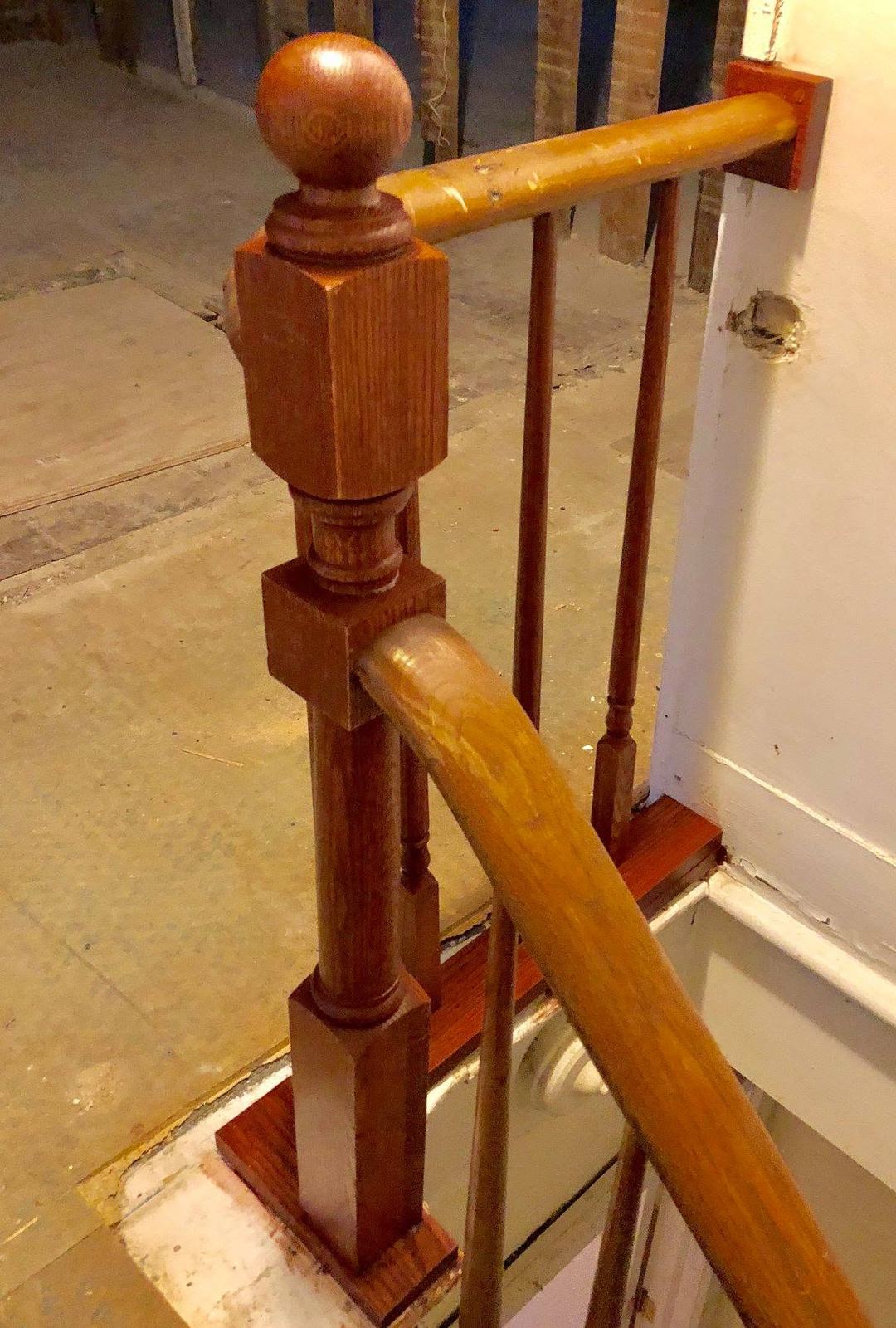
Under the New York State Residential Code, which is based on the International Residential Code, stairs need a handrail on at least one side whenever a flight has four or more risers. The rail should sit 34 to 38 inches above the front edge of the treads, run the full length of the flight, and be shaped so a hand can wrap around it. That rule applies to interior stairs, cellar stairs and exterior steps alike, and it is one of the most common things we find missing or loose in older Saratoga Springs homes.
The four-riser rule, explained
A riser is the vertical part of each step. Count the rises from the lower floor to the upper one: three steps up to a landing is three risers, and does not trigger the requirement. Four or more does. A front stoop with four steps needs a rail just as much as a full staircase to the second floor.
The rule is about each flight, not the whole stair. If a staircase has a landing partway up, each run between floor and landing is counted on its own. A short run of four steps up to a landing still needs a rail.
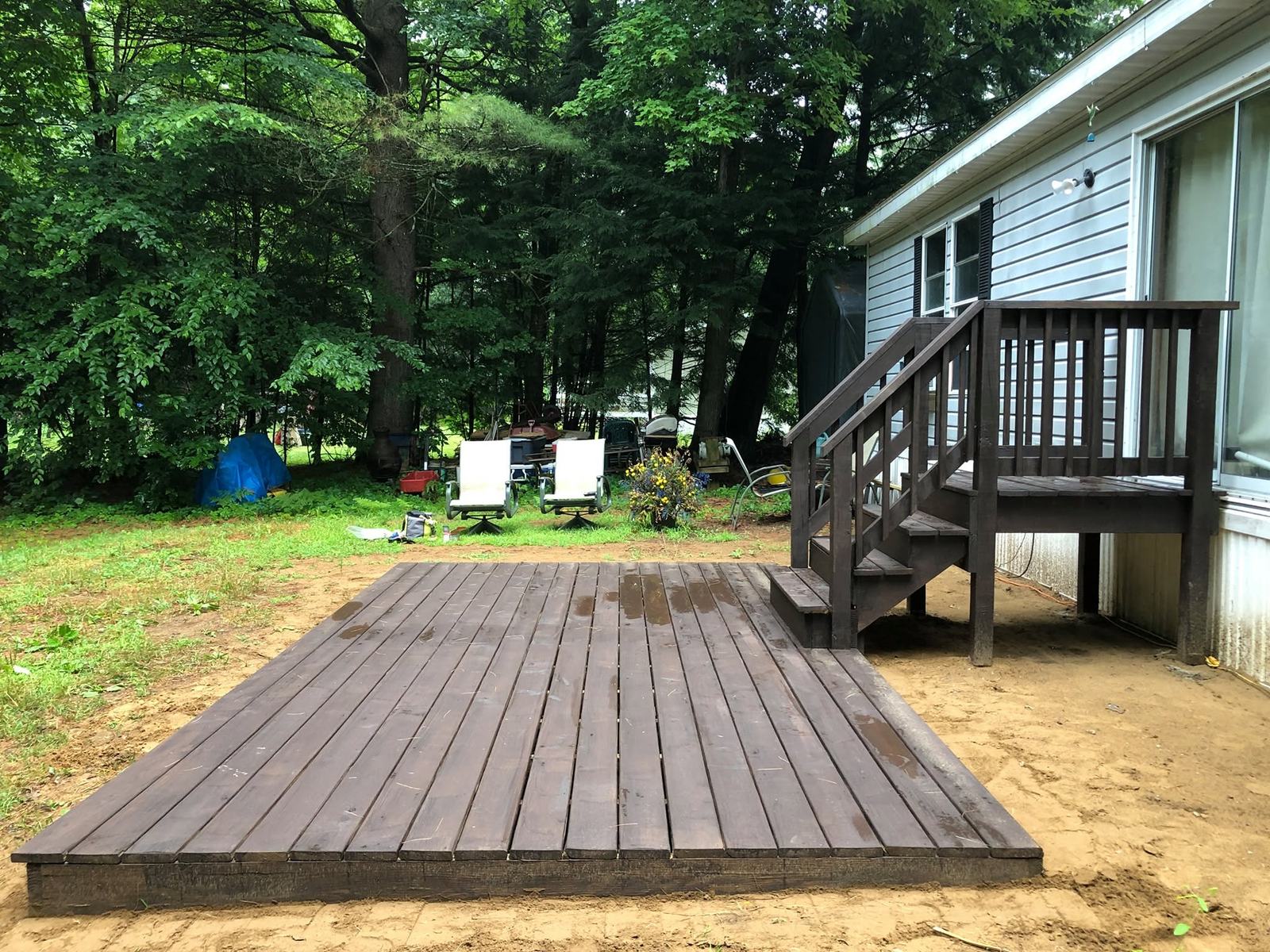
People are often surprised that exterior steps count. Wet, icy or snow-covered steps are where a handrail matters most, and in a Capital Region winter that describes front steps for several months of the year. Our guide to concrete and wood step repair covers the steps themselves.
Height, grip and continuity
A handrail that technically exists can still fail at the moment someone needs it. The main requirements are:
- Height: 34 to 38 inches, measured straight up from the line connecting the front edges (nosings) of the treads.
- Continuous: the rail should run from a point above the bottom riser to a point above the top riser without breaks, so a hand can slide along it the whole way.
- Graspable: a round rail roughly 1-1/4 to 2 inches across is the classic shape. Wide flat boards and decorative caps that are too big to wrap your fingers around do not meet the intent.
- Clearance from the wall: at least 1-1/2 inches between the rail and the wall so knuckles do not scrape.
- Ends: returned to the wall or ending in a newel post, so sleeves and bag straps do not catch on an open end.
A rail also has to be fastened into solid backing. Brackets screwed only into drywall or old plaster will pull out under a person's full weight. On plaster walls we locate the studs or add blocking before mounting brackets.
Handrails and guards are different things
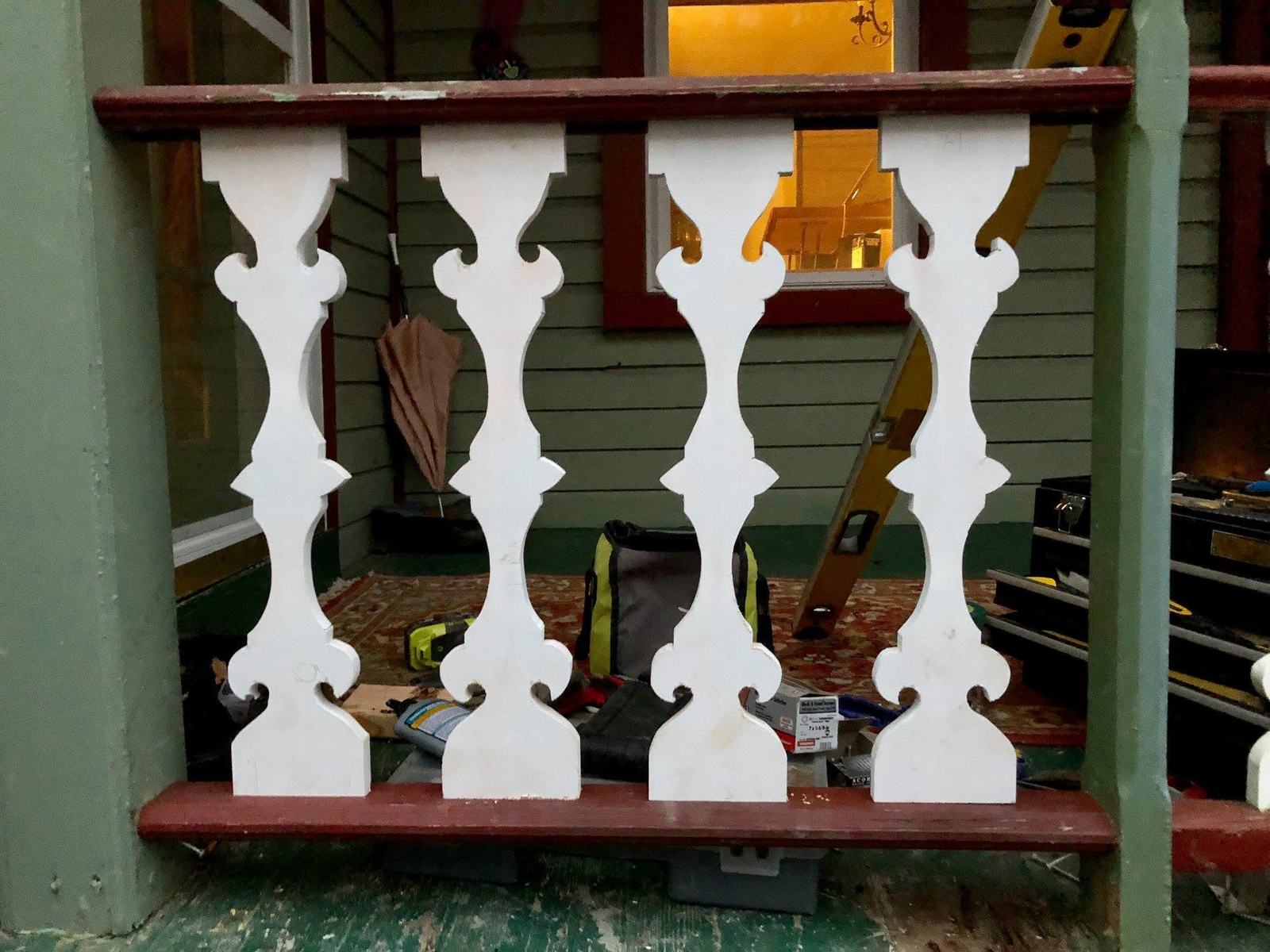
A handrail is what you hold. A guard is the barrier that keeps someone from falling off an open side. They often share the same parts, especially on an open staircase with balusters, but the rules are separate.
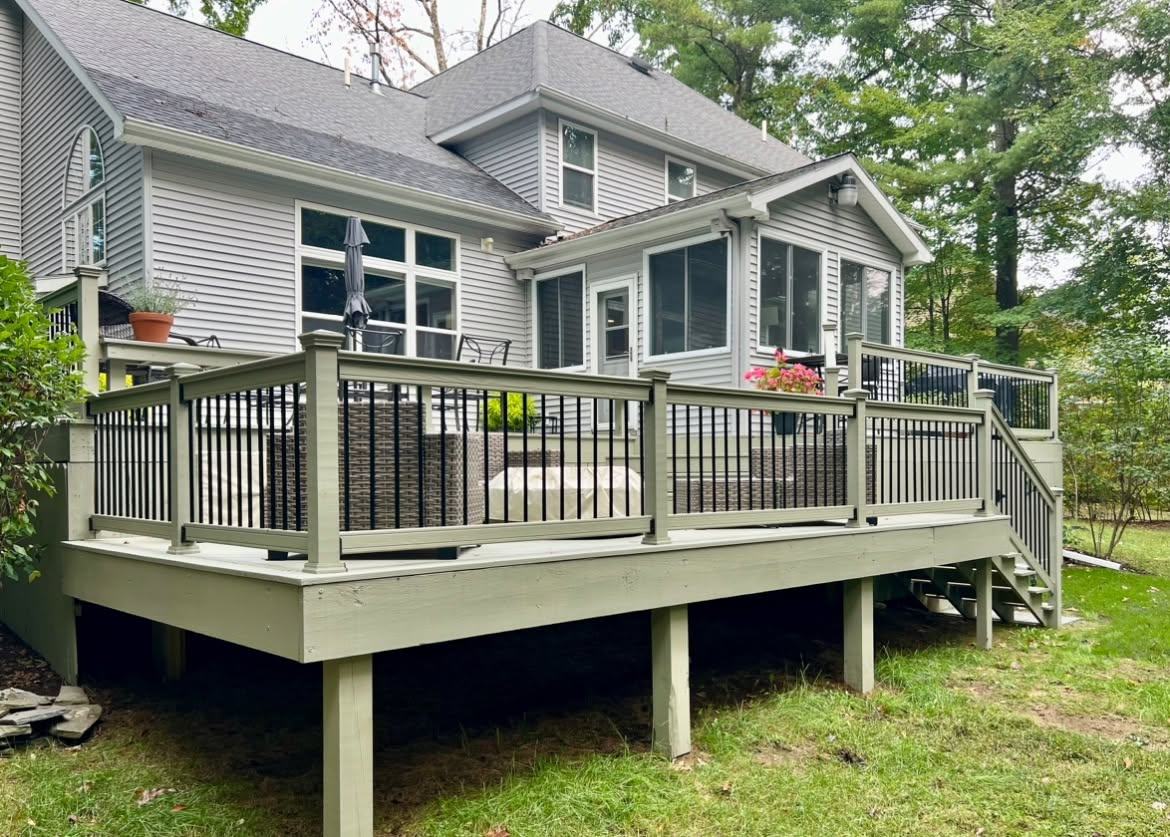
Under the residential code, guards are required where a walking surface, including the open side of a stair, is more than 30 inches above the floor or ground below. On decks and porches the guard must be at least 36 inches high, and openings between balusters must be small enough that a 4-inch sphere cannot pass through. Along the sloped side of a stair the height is measured from the tread nosings and the opening rule allows slightly more. If you are planning a new stair or porch rail, your building department can confirm the exact numbers for your project.
Our post on porch railing repair goes deeper on guards for older porches.
What we find on older Saratoga Springs stairs
Saratoga Springs has a large stock of houses built long before modern codes. Their stairs are often handsome and often not quite right by today's standards. Common issues include:
- A beautiful turned newel and balustrade on the open side, but no rail at all on the wall side of a narrow, steep stair.
- Original rails at 30 or 32 inches, lower than the current range.
- Cellar stairs with no rail, or a two-by-four nailed to the wall that ends a few steps short of the floor.
- Newel posts that have loosened over decades so the whole balustrade sways.
- Exterior porch steps rebuilt at some point without any rail.
Existing stairs are generally not forced to meet current code unless the work is being altered or permitted. Still, adding a compliant wall rail is one of the most effective safety improvements in an older house, and it can almost always be done without disturbing original woodwork. When a staircase is historically significant, we tighten and reinforce the original newel rather than replace it. Our article on staircase restoration explains how we decide between repair and replacement. If the work is on the exterior of a house in a Saratoga Springs historic district, check with the city whether Design Review Commission approval is needed first.
When to add a rail even if it is not required
The code sets a minimum. Plenty of situations call for more:
- Rails on both sides. For anyone with a bad knee, a weak hand or balance problems, a rail on each side lets them hold on with their stronger hand going up and down.
- Short runs. Two or three steps between a mudroom and kitchen, or down into a sunken living room, are a classic trip point, especially at night.
- Cellar stairs. These are often steep, dim and used while carrying laundry. A solid rail the full length of the stair is worth adding regardless of riser count. See our post on basement stair repair.
- Visiting parents or grandparents. A sturdy rail at the front steps is often the first change families make. Our home safety checklist for elderly parents lists others.
Frequently asked questions
Do three steps need a handrail in New York?
Not under the residential code minimum, which starts at four risers. That said, short runs of two or three steps cause many falls, and a rail is a modest project compared with the risk. Exterior steps that ice over are a good candidate even when the rule does not apply.
How high should a stair handrail be?
Between 34 and 38 inches, measured vertically from the line of the tread nosings to the top of the rail. Measure at several points along the stair, because older rails sometimes sag or were installed at a different height at each end.
Does an old staircase have to be brought up to code?
Generally, existing stairs are not required to meet the current code unless they are being altered or the work requires a permit. Your town or city building department can tell you what applies to your project. Safety is a separate question, and a loose or missing rail is worth fixing either way.
We build and repair stairs, handrails and guards inside and outside the house, from cellar stairs to porch steps, and we work on older homes across Saratoga Springs. Every project starts with a site visit and a written scope with the price tied to each phase. See more on our decks, stairs and railings page.