Signs your deck needs to be replaced, not just repaired
How to check a deck's frame, footings, fasteners and railings, and how to decide between new boards on the old frame and a full rebuild.
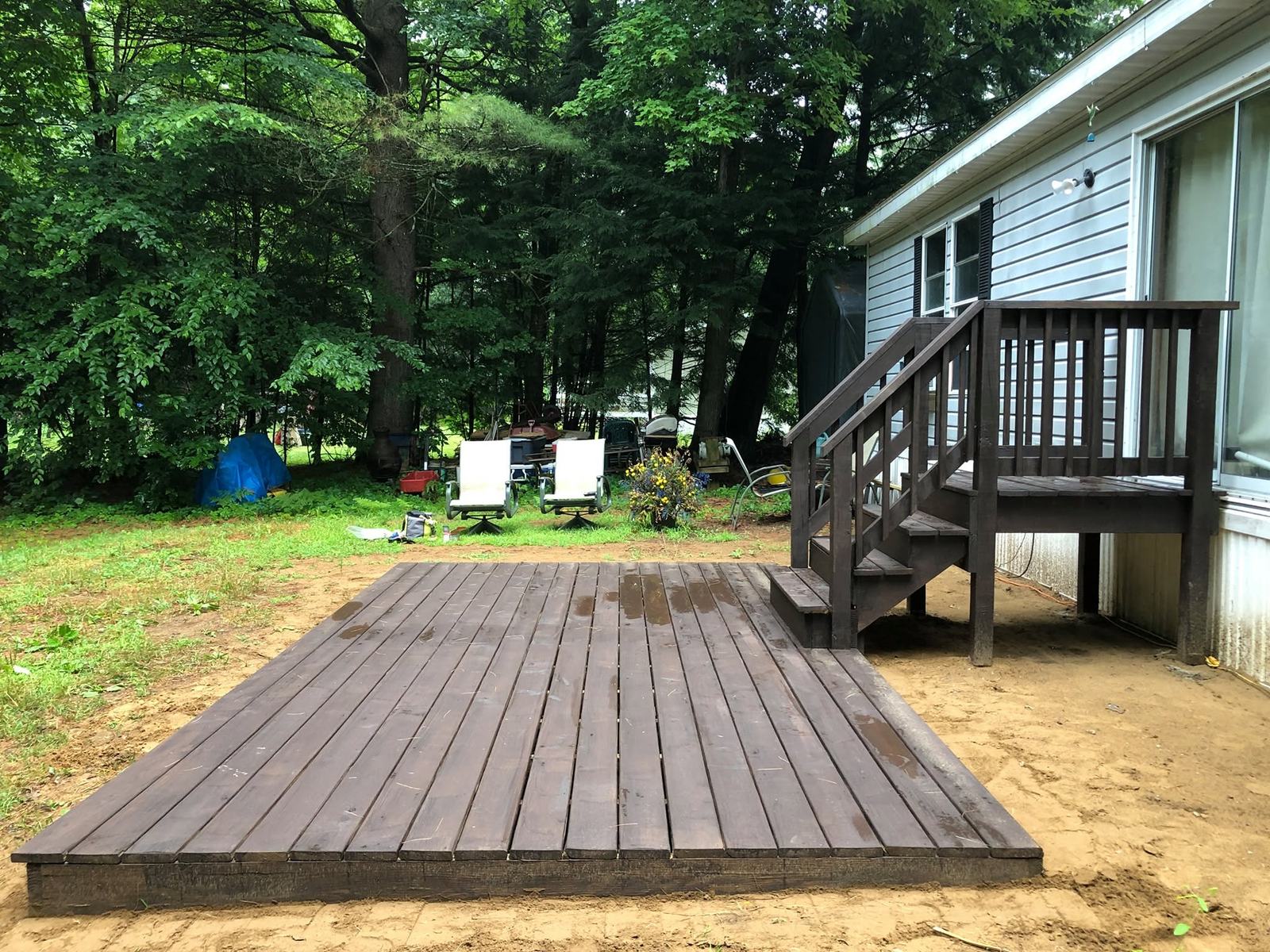
A deck needs to be replaced, not just repaired, when the problems are in the structure: rot in the posts, beams or joists, a ledger board pulling away from the house, connectors rusted thin, footings that have heaved or sunk, or railings that move no matter how many screws you add. Gray, splintery boards on their own usually mean the deck needs a refinish or new decking, not a new deck. The key is to look underneath, because the floor is the least important part of the story.
Start underneath, not on top
Most homeowners judge a deck by its surface. We start with a flashlight and a screwdriver under the frame. The boards you walk on are replaceable. The posts, beams, joists, ledger and footings are what hold the deck, and the people on it, in the air.
Press a screwdriver into the wood at the places water collects: the tops of posts, the ends of joists, where joists sit on the beam, and along the ledger where the deck meets the house. Sound wood resists. Rotted wood lets the tip sink in easily or comes away in soft, stringy pieces. A few soft spots on the decking can be fixed. Soft framing in more than one or two places usually means the frame has reached the end of its life.
The eight signs we look for
1. Rot in posts, beams or joists
Framing rot is the most common reason a deck cannot be saved. It often starts where wood touches wood and water sits: the top of a beam under each joist, or the end grain of joists cut without sealing.
2. A ledger pulling away from the house
The ledger board bolts the deck to the house. A visible gap, water stains on the siding or foundation below it, or rusted fasteners are serious warnings. Ledger failures are a leading cause of deck collapses. Our deck ledger board inspection guide walks through what to look for.
3. Rusted or missing connectors
Modern decks rely on metal joist hangers, post bases and hurricane ties. Older decks often have none, with joists simply nailed to the ledger. Where connectors exist, check for heavy rust or flaking. Current pressure-treated lumber is more corrosive to steel than older formulas, so connectors and fasteners need to be rated for it, typically hot-dip galvanized or stainless steel.
4. Posts buried in the ground
Many older decks have wood posts set directly in soil or concrete. Even treated wood rots at the ground line over time. Today's practice is to set posts on metal bases above concrete footings, keeping the wood off the ground.
5. Heaved or sunken footings
Frost pushes shallow footings up, and poor soil lets others settle. Signs include a deck that slopes in a new direction, a gap opening at the house, stairs that pull away from the deck, or posts that are no longer plumb. Footings need to be below the local frost line; your building department can confirm the depth for your town.
6. Railings that move
Push firmly on rail posts at the top. If they flex, the connection to the frame may be loose, rotted, or never built to resist that force. Guards on decks more than 30 inches above grade must be at least 36 inches high under the residential code, with openings that a 4-inch sphere cannot pass through. Many older decks have rails that are too low or balusters spaced too wide.
7. A bouncy or sagging floor
A floor that bounces or dips can mean joists spaced too far apart, spans too long for the joist size, or framing weakened by rot. If the frame was undersized from the start, replacing the boards will not help.
8. Widespread soft or broken boards
A few cracked boards are routine maintenance. When soft spots show up across the whole floor, it often means the deck has been wet for years, and the joists underneath deserve a close look.
Repair, resurface or rebuild
Most decks fall into one of three groups.
| Condition | What usually makes sense |
|---|---|
| Sound frame and footings, worn finish | Clean, repair a few boards, restain |
| Sound frame and footings, worn or rotted decking | New decking and rails on the existing frame |
| Rot or damage in the frame, ledger or footings | Rebuild the deck, often on new footings |
Resurfacing is a good option when the frame is truly sound, and it is a common way to switch to composite boards. But a new floor on a tired frame is a poor trade: the decking might last decades while the joists underneath give out much sooner. We check the frame before recommending new decking. If you are weighing materials, see our comparison of composite vs wood decking.
If your deck only looks rough on top, a cleaning and fresh finish may be all it needs. Our guide on how often to stain a deck covers that path.
Older decks around Saratoga Springs
Saratoga Springs has decks of every age, from additions built onto Victorian houses to decks that came with homes in newer neighborhoods on the edges of the city. Decks built before current codes often have nailed ledgers, posts in the ground and short rails. Some are fine for years. Others reach a point where every repair uncovers another one.
Pressure-treated lumber made before about 2004 was usually treated with chromated copper arsenate (CCA). It is not a reason to panic, but it should never be burned, and anyone cutting or sanding it should wear a dust mask and clean up carefully. Old deck lumber should be disposed of according to local rules.
A full replacement usually needs a building permit. Our post on building permits in Saratoga Springs explains when to check with the city, and our guide to choosing a deck builder in Saratoga Springs covers the questions to ask before you hire.
Frequently asked questions
How long does a wood deck last in upstate New York?
It depends on how it was built and maintained. Decks with good drainage, rated fasteners, posts off the ground and regular finish can last many years. Decks with buried posts, nailed ledgers or long stretches without stain often show structural rot much sooner. The condition of the frame matters more than the age.
Can I just replace the deck boards?
Yes, if the frame, ledger, footings and connectors are sound and the joists are sized and spaced for the new decking. Composite boards often require closer joist spacing than wood, so check the manufacturer's requirements before resurfacing.
Is a wobbly deck railing dangerous?
It can be. A guard that gives way when someone leans on it can cause a serious fall, especially on a deck well above the ground. Keep people off that section until the posts are properly secured or the rail is rebuilt.
We repair, resurface and rebuild decks, stairs and railings in Saratoga Springs and nearby towns. On a site visit we check the frame, ledger and footings, then give you a written scope organized by phase so you can see exactly what is being repaired or replaced. See examples on our decks, stairs and railings page.