How often should you seal grout?
A practical schedule for sealing cement grout in showers, kitchens and entry floors, the quick test that tells you it is due, and when grout needs replacing instead.
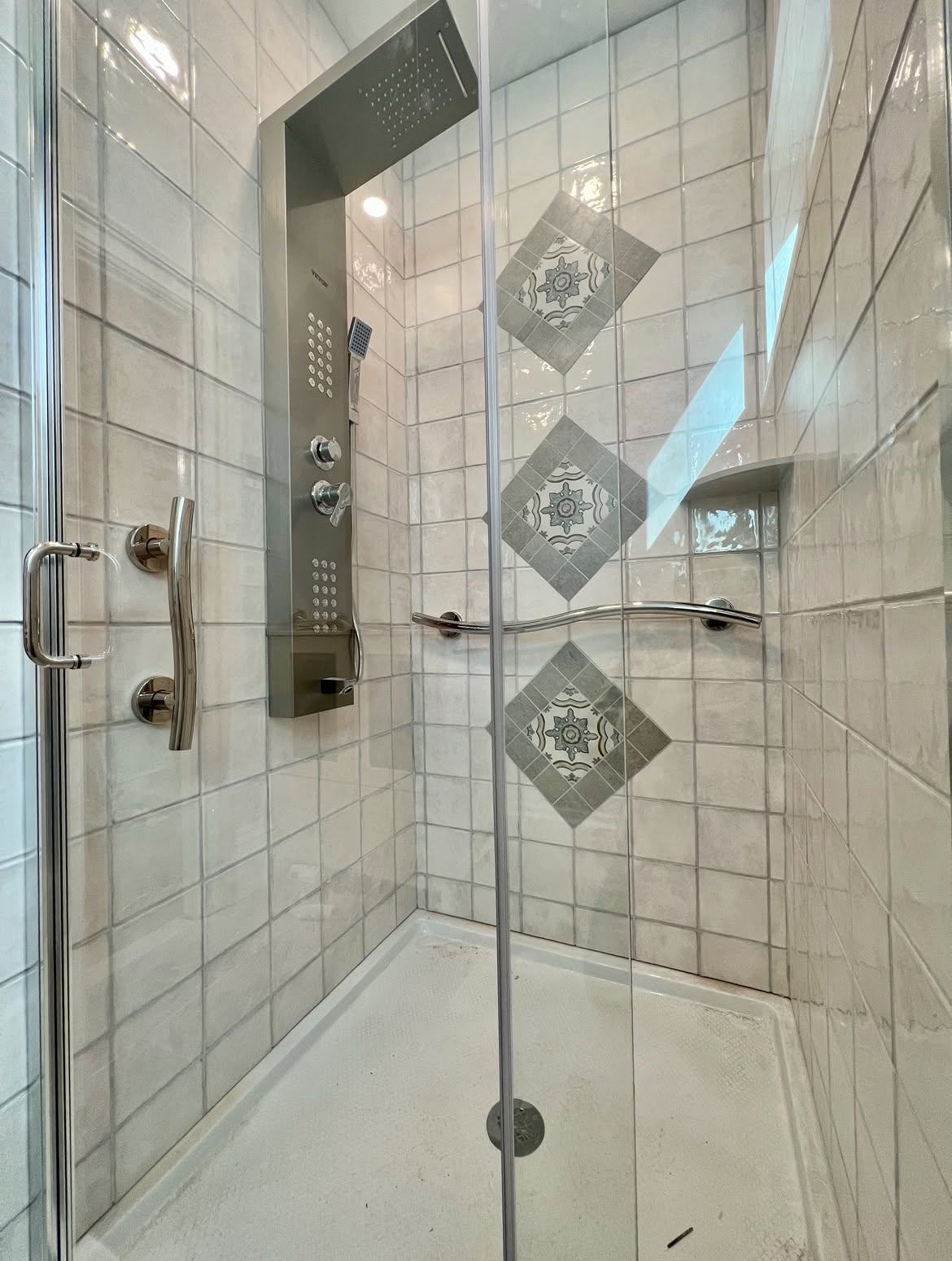
Cement-based grout in a shower should be sealed about once a year, and grout on floors, backsplashes and other areas that see less water usually needs it every one to three years. The quick test is a few drops of water on the grout line: if they bead up, the sealer is working; if the grout darkens within a few minutes, it is time to reseal. Epoxy grout and some premixed grouts do not need sealing at all, so it helps to know what is in your joints before you buy a bottle.
Why grout needs sealing
Traditional grout is made from cement, sand and water. Once it cures it is hard, but it is also porous, full of tiny passages that absorb water, soap residue, body oils and dirt. That is why light grout turns gray along the bottom of a shower and why a kitchen floor's grout darkens in the path from the sink to the stove.
A penetrating sealer soaks into those pores and makes the grout resist water and stains. It does not make the grout waterproof, and it does not stop water that is already getting behind the tile through cracks or failed caulk. Think of it as stain protection and a way to slow down how much water the grout soaks up between showers.
The real waterproofing in a well-built shower is behind the tile: a membrane over cement board or a similar system. If your grout is crumbling, cracked, or missing in spots, sealer will not help, and you should read our guide to the signs of a leaking shower behind tile.
The water drop test
Put a few drops of water on several grout lines in different places: the shower floor, the wall where the spray hits, and an area that rarely gets wet. Wait three to five minutes.
- Water beads on the surface: the sealer is still doing its job.
- Grout darkens slowly: the sealer is wearing. Plan to reseal soon.
- Grout darkens immediately: the grout is absorbing freely and is due now.
Another clue is grout that looks dark after a shower and stays dark for hours. Sealed grout dries quickly. Unsealed or worn grout holds moisture, which also feeds mildew.
A practical sealing schedule
| Location | Typical interval | Notes |
|---|---|---|
| Shower walls and floor | About once a year | More often for showers used several times a day |
| Tub surround above the tub | Every 1 to 2 years | Lower walls wear faster than upper walls |
| Kitchen backsplash | Every 2 to 3 years | Behind the stove and sink may need it sooner |
| Kitchen and bathroom floors | Every 1 to 3 years | High-traffic paths wear first |
| Entry and mudroom tile | About once a year | Winter salt and slush are hard on grout |
Those entry floors deserve a note for Capital Region homes. From November to April, boots carry snowmelt, sand and road salt across mudroom and front hall tile. Salt residue left to dry in grout joints can leave white deposits and wear down the surface. A good mat at the door, regular damp mopping with plain water or a neutral cleaner, and a yearly reseal in late spring keep entry grout from aging faster than the rest of the house.
Which grouts do not need sealer
Not every grout line needs this treatment:
- Epoxy grout is made from resin and hardener rather than cement. It is highly stain resistant and does not need sealing.
- Some premixed urethane or single-component grouts are formulated to resist stains without a separate sealer. Check the manufacturer's information.
- Many cement grouts now include additives that improve stain resistance, but most manufacturers still recommend sealing.
If you do not know what was used, assume cement grout and do the water test. If you are tiling or regrouting, epoxy or a high-performance grout can take sealing off your list.
How to seal grout properly
- Clean thoroughly first. Use a pH-neutral tile cleaner and a stiff nylon brush. Sealing over dirt locks the dirt in. Avoid harsh acidic cleaners on cement grout and natural stone; over time they can etch the surface and strip existing sealer.
- Let it dry completely. Grout that looks dry on top can still hold moisture. Give it at least a day without use, longer in a humid bathroom. Running the exhaust fan helps; see our post on bathroom fan mold prevention.
- Apply a penetrating sealer to the joints. An applicator bottle with a small wheel or brush tip keeps sealer on the grout. Wipe any sealer off the tile surface before it dries, since some products leave a haze on glazed tile.
- Apply a second coat if the product calls for it.
- Let it cure. Keep the area dry for the time on the label before showering or mopping.
Newly installed cement grout has to cure before it can be sealed. Manufacturers usually specify a waiting period of a few days; follow the grout and sealer instructions.
If your tile is natural stone, such as marble, travertine or slate, the tile itself usually needs sealing too, often with the same product. Glazed ceramic and porcelain tile do not.
When it is time to regrout instead
Sealer cannot fix grout that is cracked, crumbling, sandy to the touch or missing in places. It also cannot fix grout stained so deeply that cleaning does not help. In those cases the old grout can often be removed and replaced without removing the tile, as long as the tiles are solid and the wall behind them is dry. Tap tiles gently with the handle of a screwdriver: a hollow sound or a tile that moves suggests a bigger problem.
Remember that the joint where the tub meets the wall, and the vertical inside corners, should be caulked rather than grouted. Our guide on how often to recaulk a tub or shower covers those joints. If the whole bathroom is starting to feel tired, our ideas for how to update a dated bathroom range from regrouting to a full new shower.
Frequently asked questions
Can you seal old grout?
Yes, as long as the grout is solid and clean. Deep-clean it first, let it dry thoroughly, and then apply a penetrating sealer. If the grout is cracked or crumbling, it should be replaced before sealing.
Does sealing grout prevent mold?
It helps by reducing how much water the grout absorbs and how long it stays damp, which makes it harder for mildew to take hold. Ventilation matters more. A bathroom fan that actually vents outdoors and runs long enough after showers does more to prevent mold than any sealer.
Should I seal grout on a new tile floor right away?
Not right away. Cement grout needs to cure first, usually for a few days, depending on the product and the conditions. Check the grout manufacturer's instructions, then seal once the waiting period has passed and the floor is clean and dry.
We build and remodel bathrooms across the Capital Region, including new showers with waterproofing behind the tile and grout chosen to suit how the room is used. Every project starts with a site visit and a written scope organized by phase. You can see our tile work on the bathrooms page.