Signs your shower is leaking behind the tile
How to read the clues that water is getting behind shower tile, how to narrow down whether it is the walls, pan, drain or plumbing, and what a lasting repair involves.
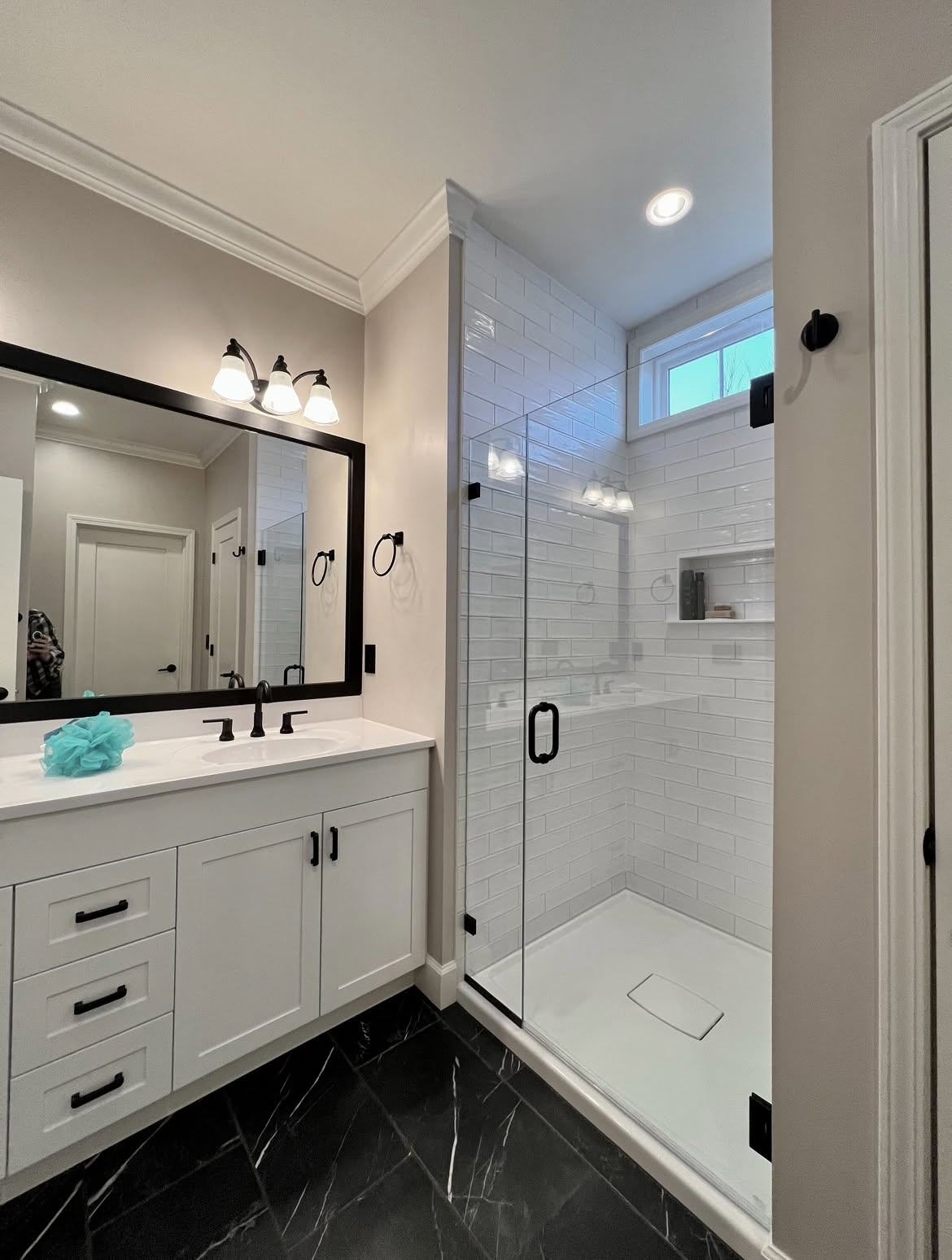
The common signs of a leaking shower behind tile are tiles that sound hollow or move when pressed, grout lines that stay dark long after a shower, a wall that feels soft or spongy, peeling paint or swelling trim just outside the shower, a musty smell, and stains on the ceiling below. Any one of these can have a simple cause, but two or more together usually mean water has been getting into the wall or floor for some time. The sooner the source is found, the less framing and subfloor have to be replaced.
Why showers leak behind the tile
Tile and grout are not waterproof on their own. Grout is porous, and a small amount of water passes through it every time the shower runs. A properly built shower handles that with a waterproof layer behind the tile: a membrane over cement board, or a similar system, plus a sloped and waterproofed pan on the floor that directs water to the drain.
Many showers built before those methods became standard practice were tiled directly over drywall or moisture-resistant "greenboard," with no real waterproofing behind it. They can perform for years, then fail once grout cracks or caulk gives out. Across Saratoga County we see this in houses of many ages, from older village homes with remodeled baths to subdivision houses whose original showers are now a few decades old.
The warning signs, inside and out
In the shower
- Loose, cracked or hollow-sounding tiles. Tap tiles gently with the handle of a screwdriver. A dull, hollow sound or a tile that shifts means the bond behind it has failed, often because the backing is wet.
- Cracked, crumbling or missing grout. Gaps give water a direct path behind the tile.
- Grout that stays dark. Sealed, healthy grout dries within an hour or two. Grout that is still dark the next morning is holding water. Our guide on how often to seal grout explains the difference between worn sealer and a deeper problem.
- Failed caulk at the tub or corners. Gaps along the tub edge or in the corners are one of the most common leak paths. See how often to recaulk a tub or shower.
- Mold that keeps coming back in the same spot even after cleaning.
Around the shower
- A soft or bulging section of wall on the other side of the shower, or next to it.
- Peeling paint, bubbling wallpaper or swelling baseboard near the shower.
- Floor tiles cracking or lifting just outside the shower, or a floor that feels soft.
- A persistent musty smell, especially when the bathroom is closed up.
Below the shower
- Water stains, bubbling paint or sagging drywall on the ceiling underneath.
- Drips or stains on the framing visible from a basement.
Narrowing down the source
Water behind tile can come from several places, and each needs a different repair. A careful process of elimination helps before anything is opened. Let the shower dry out completely for a day or two first so new stains are easier to spot.
- Plumbing supply or valve. If you see dampness or stains even when the shower has not been used, the supply lines or valve inside the wall may be leaking. This is a job for a licensed plumber. Shut off the water to that fixture if you can, and call promptly.
- The drain. Pour water directly into the drain without wetting the walls or floor, then check below. Drain connections can loosen over time.
- The pan or tub. For a tiled shower floor, a plumber or contractor can plug the drain and fill the pan with a shallow depth of water for a set time to see whether the level drops or stains appear below. For a tub, check the overflow and drain gaskets.
- The walls. With the drain clear, spray only the walls for several minutes, one section at a time, and check for new dampness.
- The door or curtain. Water escaping past a shower door or curtain and running along the floor can mimic a leak. Watch the floor outside the shower while it is in use.
If the source turns out to be a plumbing leak, a failed pan or a wall that is soft to the touch, the repair is beyond caulk and grout.
When to call a professional
Some situations need a professional sooner rather than later:
- The wall or floor is soft, or tiles are falling off.
- There is visible mold larger than a small patch. EPA guidance suggests professional help for mold covering more than about 10 square feet, and anyone with asthma or allergies should not disturb mold themselves.
- Water is reaching the ceiling below, which can involve electrical fixtures. Turn off the power to affected lights and call an electrician if water is near wiring.
- The leak is from supply plumbing inside the wall.
In older homes, the materials being removed may need testing before demolition. Pre-1978 houses can have lead paint on nearby walls and trim, and some older flooring, adhesives and pipe insulation contain asbestos.
What a lasting repair involves
When water has been getting behind the tile for a long time, patching usually does not hold. The lasting fix is to remove the tile and wet backing, let the framing dry, replace any rotted studs or subfloor, and rebuild the shower with a proper waterproofing system before new tile goes on. That is also the moment to correct the slope of the floor, add a niche or bench, or replace an aging valve.
The full scope depends on what is found when the wall is opened. If that changes the price or schedule, we agree the change in writing, as a change order, before the work continues. For a sense of the timeline, our post on how long a bathroom remodel takes breaks down each phase.
Frequently asked questions
Can I fix a leaking shower by regrouting?
Sometimes, if the leak is caught early and the backing behind the tile is still dry and solid. If tiles are loose, the wall is soft, or stains appear below, the water has already done damage behind the tile and regrouting will only hide it.
How do I know if the shower pan is leaking?
Stains on the ceiling below that appear after showers, a soft floor around the shower, or grout on the shower floor that never dries out are common signs. A flood test, where the drain is plugged and the pan is filled with shallow water for a period of time, is the usual way to confirm it.
Is a leaking shower an emergency?
A supply line leak that runs constantly, or water near electrical fixtures, needs attention right away. A slow leak through grout or caulk is not an emergency, but it gets worse with every shower and can lead to rot and mold, so it is worth addressing within weeks rather than months.
We rebuild leaking showers and remodel bathrooms across Saratoga County, with proper waterproofing behind every new tile wall and floor. It starts with a site visit and a written scope organized by phase. See more on our bathrooms page.