Concrete and wood step repair: fixing what freeze-thaw does to outdoor steps
How winter breaks down concrete stoops and wood entry stairs, the difference between a patch and a rebuild, and how to keep steps safer in ice season.
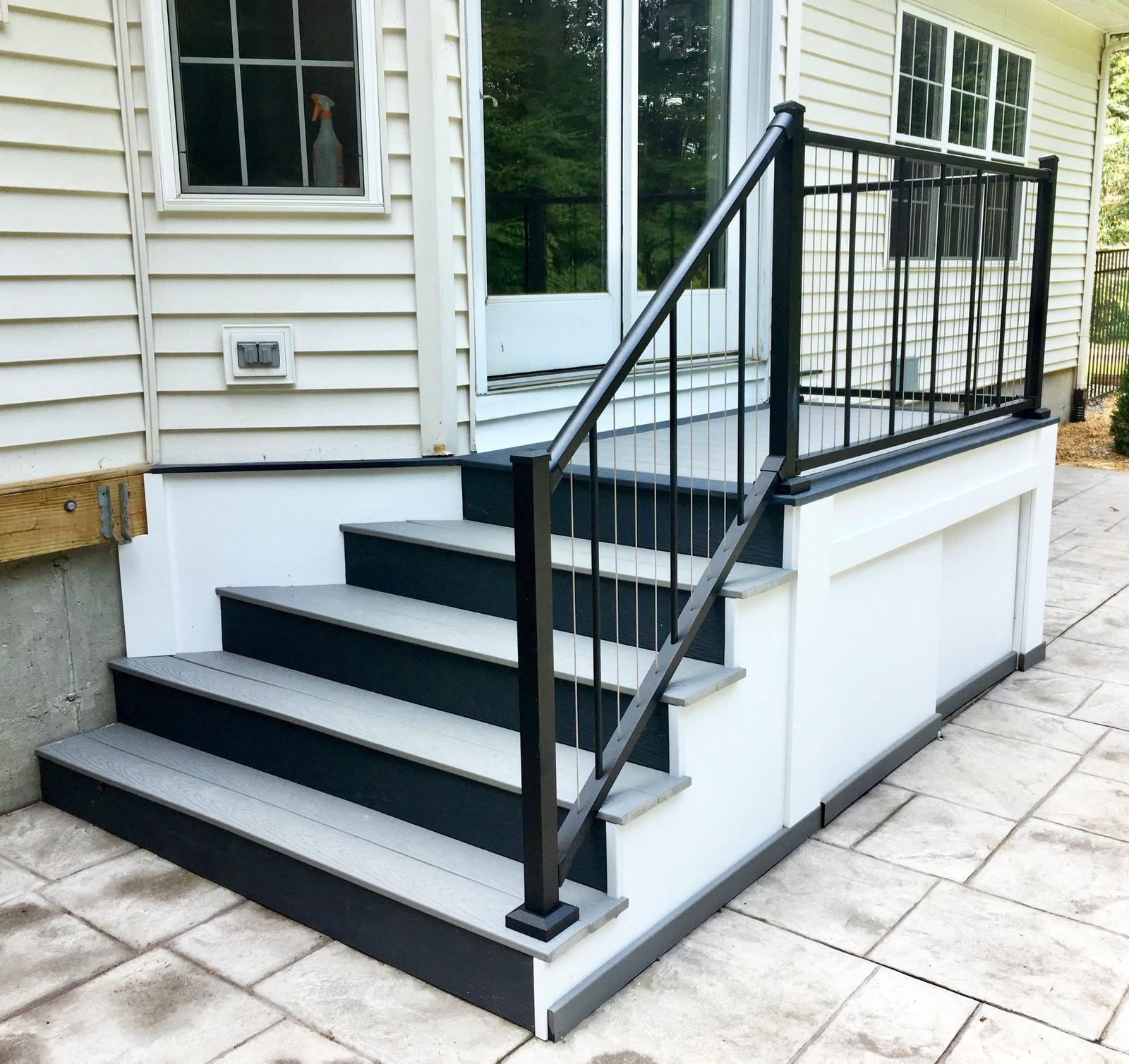
Concrete and wood outdoor steps fail in different ways, but in Saratoga County the cause is usually the same, which is water getting in and then freezing. Concrete steps crack, flake and heave, while wood steps rot at the stringers and loosen at the treads. Small cracks and surface flaking can often be repaired, but steps that tilt, pull away from the house, or move every winter usually need to be rebuilt on a proper foundation. Because entry steps are used every day in ice and snow, uneven or loose steps are a safety problem, not just a cosmetic one.
How freeze-thaw damages steps
Water expands when it freezes. When it seeps into a crack in concrete, a joint between steps and the house, or the end grain of a wood stringer, each freeze pushes the gap a little wider. Capital Region winters can swing above and below freezing many times, so a hairline crack in November can be a loose chunk by March.
The ground moves too. Soil that holds water expands as it freezes and lifts whatever sits on it, a process called frost heave. Steps built on a slab or on shallow footings rise in winter and settle unevenly in spring. Over several years, that movement opens a gap where the steps meet the house, tips the steps forward or sideways, and cracks the concrete.
Salt and chemical de-icers add to the damage on concrete. They increase the number of freeze-thaw cycles at the surface and can cause the top layer to flake away.
Concrete steps: what to look for
| What you see | What it usually means |
|---|---|
| Hairline cracks, steps still level | Normal shrinkage or minor movement; seal to keep water out |
| Flaking or pitted surface (spalling) | Freeze-thaw and salt damage to the surface layer |
| Broken corners or edges on treads | Impact plus freeze-thaw; a tripping hazard |
| A widening gap between the steps and the house | Steps settling or heaving separately from the foundation |
| Steps tilted forward or sideways | Frost heave or settling under the base |
| Wide cracks that grow each year | Structural movement; patching won't last |
Repair options for concrete
- Sealing cracks. Narrow cracks can be filled with a flexible exterior concrete crack sealant to keep water out.
- Patching edges and corners. Broken nosings can be rebuilt with a bonded repair mortar. Patches last best on steps that are otherwise stable.
- Resurfacing. A thin bonded overlay can restore a flaking surface if the concrete underneath is sound.
- Penetrating sealer. Applied to clean, dry concrete, a sealer can slow water and salt absorption.
- Rebuilding. Steps that have moved, tilted or separated from the house need new support. That can mean new concrete steps on footings below frost depth, or replacing the stoop with a wood or composite stair on proper footings.
Patching moving steps rarely lasts. If the base keeps heaving, the patch cracks along with it.
Wood steps: what to look for
Wood entry steps and deck stairs face a different set of problems.
- Rot at the bottom of stringers where they rest on soil, a paver or a concrete pad that holds water
- Loose or cupped treads as fasteners back out through seasonal swelling and shrinking
- Soft spots at tread ends and around screws, where water collects
- Posts and footings that have heaved, leaving the stair out of level or the landing tilted
- Handrails that wobble because their posts have loosened
Probe the bottom few inches of each stringer and the base of each post with a screwdriver. Soft wood there is the main warning sign. Individual treads can be replaced, and stringers can sometimes be repaired, but rotted stringers on an older stair usually mean rebuilding. A new stair should sit on a concrete pad or footing so the wood stays off the ground, use rot-resistant or treated framing, and have enough gap between treads to drain.
When we rebuild entry steps, we often use composite treads and risers over treated framing, because composite resists rot and holds up well to snow shovels. Our post comparing composite and wood decking in upstate NY covers the trade-offs.
Footings, frost and permits
Steps that keep moving every winter usually need footings that extend below the frost line. Frost depth requirements are set locally, so check with your town or city building department for the depth that applies and whether the work needs a permit. Steps and landings attached to the house, and especially those that change the structure of an entry, often do.
Handrails and safety
Under the New York State Residential Code, stairs with four or more risers need a handrail, mounted 34 to 38 inches above the tread nosings. Even on shorter entry steps, a sturdy rail is one of the most useful additions for icy months. Our post on when stairs need a handrail covers the details.
A few habits make steps safer through the winter:
- Keep a downspout from dumping onto or beside the steps. Water that refreezes there causes a lot of falls.
- Use a de-icer that is labeled as safe for concrete, or sand for traction. Avoid salt on new concrete for at least its first winter.
- Shovel with a plastic blade on composite and wood treads to avoid gouging.
- Keep the steps well lit, with a light that reaches the bottom step.
- Repair loose treads and broken edges before snow arrives, as part of a fall home maintenance checklist.
For anyone who finds steps hard to manage, it can make sense to look at other options at the same time, such as a gentler rise, a wider landing, or a ramp. Our post on ramps and safer entry steps covers those choices.
When to repair and when to rebuild
Repair makes sense when the steps are level, stable and attached to the house, and the damage is limited to the surface or a few parts. Rebuilding makes sense when steps have heaved, tilted or separated from the house, when cracks grow every year, or when wood stringers and posts are rotted. A spring check right after the thaw, part of our spring home inspection after winter, is the best time to see how much the steps moved.
Frequently asked questions
Can I fix concrete steps that have pulled away from the house?
Filling the gap with sealant can keep water out for a while, but it won't stop the movement. Steps that separate from the house are usually settling or heaving on their own base. A lasting fix means new support or rebuilding the steps.
Why are my concrete steps flaking?
Flaking, called spalling, usually comes from water and de-icing salt freezing in the surface layer. Concrete that was finished poorly or that received salt in its first winter is especially prone. Resurfacing can help if the concrete underneath is sound.
Should I replace concrete steps with wood or composite?
It depends on the house and how the steps are used. Concrete is durable when properly built, while wood or composite stairs on footings can be easier to rebuild, take a handrail easily, and suit decks and porches. Either should be built on a foundation that resists frost heave.
We repair and rebuild entry steps, stairs and handrails, in wood and composite, through our decks and stairs work. After a site visit you receive a written scope of work by phase, with the price and payment schedule for each phase.