Signs your bulkhead door needs to be replaced
How to tell whether a steel or wood cellar door can be repaired or should be replaced, what causes leaks around it, and how replacement works.
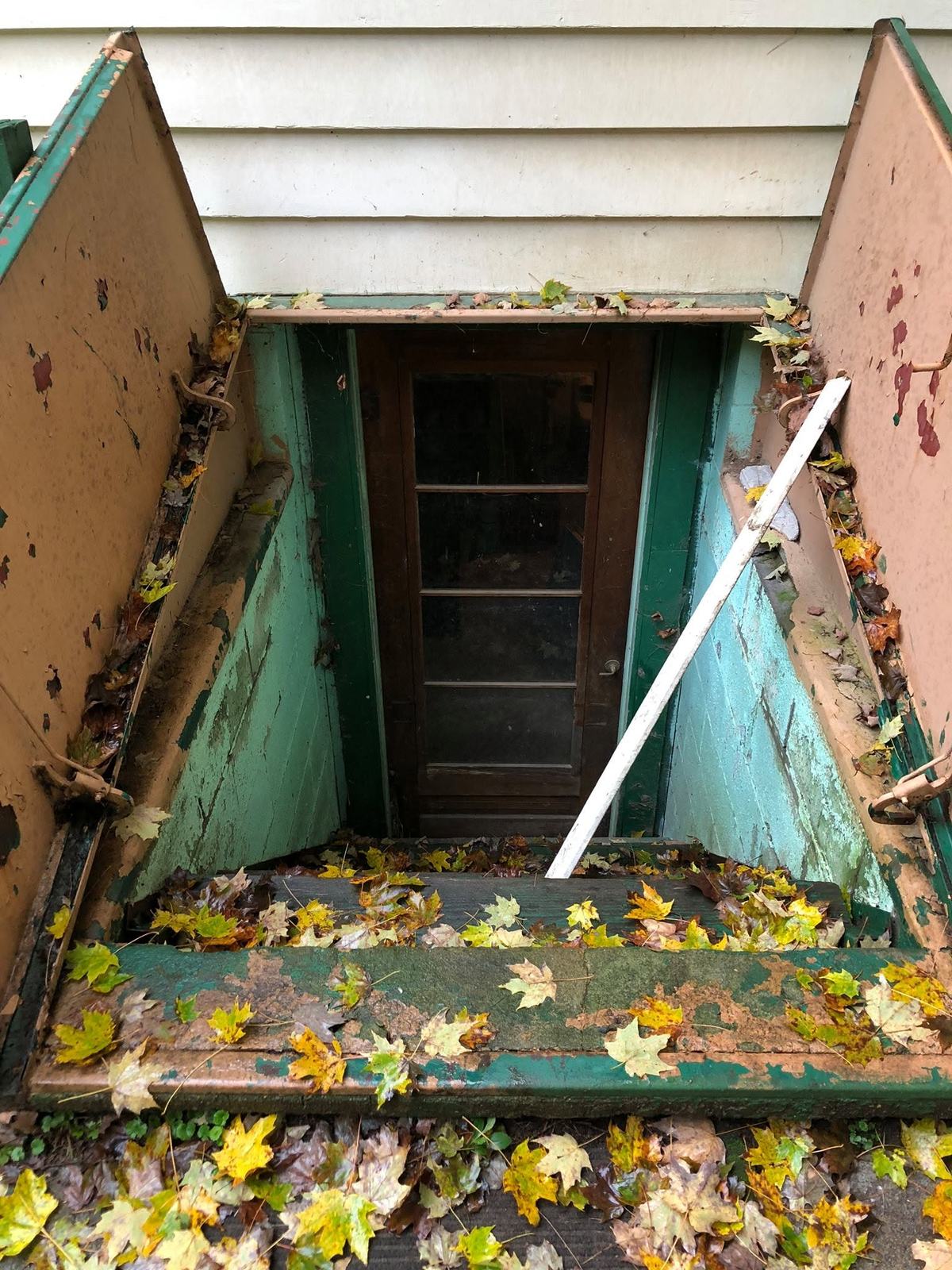
A bulkhead door needs to be replaced when the steel has rusted through, the doors no longer close and lock properly, or water gets past the frame onto the cellar stairs every time it rains or snow melts. Surface rust and stiff hinges can usually be fixed with cleaning, rust treatment and paint. Holes, warped panels and a frame that has pulled away from the foundation generally cannot. In Saratoga County, where a bulkhead spends months under snow and road salt drifts against it, most steel doors eventually reach that point.
What a bulkhead is and why it wears out
A bulkhead, often called a cellar door, is the angled pair of doors over an outside stairway into the basement. Most modern ones are steel, mounted on a sill or the top of a concrete or masonry areaway. Many older houses in the region still have wood bulkheads, sometimes built on a wood frame that sits directly on the foundation.
Bulkheads take a lot of abuse. Snow piles on the sloped doors and melts slowly. Meltwater runs to the bottom edge and the joint with the house. Salt and de-icer tracked from walks and driveways speed corrosion. Kids, pets and delivery workers walk across them. Each freeze-thaw cycle works at the seal between the bulkhead frame and the foundation. Over time the paint fails, rust starts at seams and edges, and the doors lose their fit.
Signs it is time to replace
Walk around the bulkhead and open and close the doors a few times. These are the signs that point toward replacement instead of repair:
- Rust holes or perforation. Pinholes or flaking that you can push a screwdriver through, especially along the bottom edges and seams.
- Doors that won't close flat or latch. Warped or bent panels leave gaps that let in water, cold air, insects and animals.
- Broken or seized hinges that cannot be freed or replaced because the surrounding metal is corroded.
- Water on the cellar stairs after rain or snowmelt, even with the doors fully closed.
- A frame pulling away from the house or rocking on its base.
- Rotted wood on a wooden bulkhead or on a wood sill or header under a steel one.
- Doors that are too heavy or awkward to open safely, because a spring or support has failed.
If the door is merely faded with light surface rust, cleaning, treating the rust and repainting with a metal primer and exterior enamel can buy several more years.
Where leaks around a bulkhead come from
Replacing the doors does not fix every leak, so it helps to find the source first.
| Where water shows up | Likely cause |
|---|---|
| Drips from the top of the doors | Gaps between panels, failed seals or a warped door |
| Water at the top of the stairs near the house | Failed seal where the frame meets the siding or foundation wall |
| Water at the bottom step or areaway floor | Groundwater or surface runoff, often from grading or a downspout |
| Damp areaway walls | Cracked concrete or masonry, or soil sloping toward the house |
Downspouts that empty near a bulkhead are a common culprit. So is soil or a patio that has settled and now slopes toward the house. Fixing grading and extending downspouts is part of a lasting repair. A new bulkhead will still leak at the bottom if water is flowing into the areaway from the yard.
What replacement involves
Steel bulkheads come in a range of standard sizes, so the first step is measuring the existing opening. The length, width and height of the frame, along with the slope, determine whether a standard unit fits directly or the base needs to be modified.
A typical replacement goes in this order:
- Remove the old doors and frame, cutting them apart if they are rusted in place.
- Inspect and repair the base, whether a concrete or masonry areaway wall, a wood sill, or the foundation itself.
- Set the new frame and fasten it to the base and the house.
- Seal the joint at the house, and the base, with a durable sealant and flashing where the siding meets the frame.
- Adjust the doors so they close flat and latch, and install hardware and any lock.
Where an old wood bulkhead sits on a rotted wood frame, the base often needs more work, such as a new pressure-treated sill or a small concrete curb. If the areaway walls are cracked or crumbling, masonry repair may come first. Cellar stairs that are worn or unsafe are often rebuilt at the same time, which our post on basement stair repair covers.
Safety and code notes
The cellar stairs under a bulkhead are still stairs. Worn treads, missing handrails and poor lighting make them a common place for falls. A handrail is required on stairs with four or more risers under the New York State Residential Code, so it is worth adding one if your cellar stairs lack it.
If the basement is finished, or contains or will contain a bedroom, egress requirements may affect what kind of door and stairway you need. Check with your town or city building department before you finalize a design.
Older homes may also have lead paint on a wood bulkhead or the trim around it. If the house was built before 1978, test before scraping or cutting.
Caring for a bulkhead between replacements
A few habits extend the life of a steel bulkhead:
- Brush snow off the doors after big storms rather than letting it sit for weeks.
- Keep de-icer and salt off the doors. Use sand or a salt-free product nearby.
- Touch up chips and scratches with metal primer and paint each year.
- Lubricate hinges and check the latch each fall.
- Keep downspouts and grading directing water away from the areaway.
These tasks fit naturally into a fall home maintenance checklist, and a quick check of the bulkhead belongs on your spring inspection after winter too.
Frequently asked questions
Can a rusted bulkhead door be repaired instead of replaced?
Light surface rust can be cleaned, treated and painted. Once rust has eaten holes through the panels or frame, or the doors are warped and won't latch, replacement is the practical choice because patches on thin, corroded steel rarely last.
Why does my bulkhead leak even when it's closed?
The doors may be warped, or the seal where the frame meets the house may have failed. Water also often reaches the areaway from outside through poor grading or a nearby downspout. Finding the source comes before deciding on replacement.
Can a new steel bulkhead replace an old wood one?
Usually, yes, though the base often needs work first. Wood bulkheads frequently sit on a wood sill that has rotted, and the opening may not match standard steel sizes, so the base may need to be rebuilt or modified to fit.
When is the best time to replace a bulkhead?
Late spring through fall is easiest, since sealants and any masonry work need warm, dry weather. A failing bulkhead can be temporarily secured in winter and replaced when conditions allow.
We replace bulkheads, rebuild cellar stairs and fix the drainage problems around them as part of our bulkheads and outdoor work. After a site visit, you receive a written scope of work by phase with the price and payment schedule for each phase.